
 Nextier
By Onyi Iyizoba
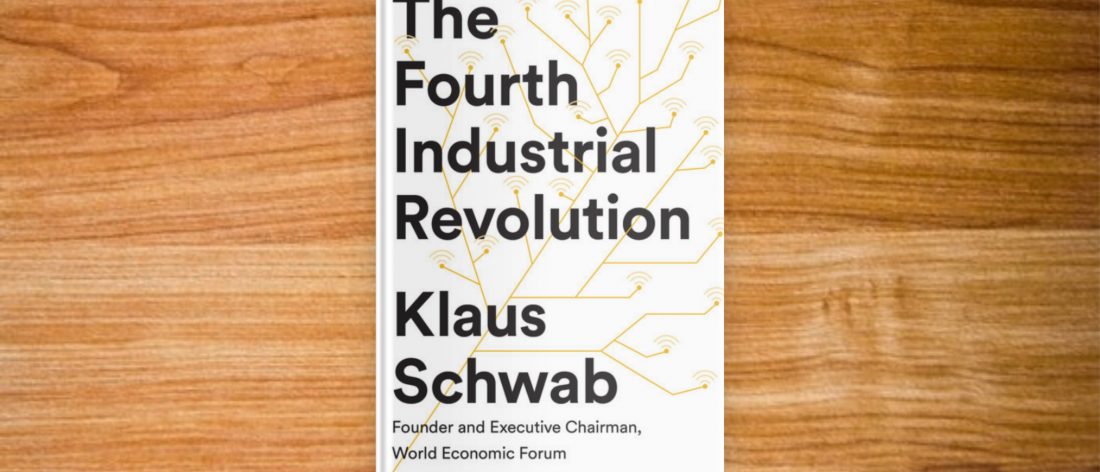
The Fourth Industrial Revolution is premised on the imminence and inevitability of a new technological revolution. It presents a deep and intense view of the new world unfolding with the fourth industrial revolution and offers a clear perception of its impending values and challenges. Unlike any of the previous industrial revolutions; Schwab postulates, the fourth industrial revolution will fundamentally alter the way we live and function.
Klaus Schwab is a renowned Economist and Business Professor. He is the founder and Executive Chairman of the World Economic Forum. His extensive experience and profound resources of the World Economic Forum community accord him plausible insights into global economic affairs and enriches the book’s discourse.
The Revolution
The book theorises that the fourth revolution will be “an exponentially disruptive change” led by technology and digitisation. A revolution fuelled by astronomical developments in material sciences, biology and digitisation. Fields of sciences that are not interrelated and never previously interacted will fuse to create incredible innovations. The new technology will create new methods that will radically transform the way human beings, institutions and machines engage and collaborate. It will consist of a conglomerate of existing and novel inventions in the physical, digital and biological domains to create an interconnected web of innovations that cut across different spheres, industries and economies. The book insists that we are at the beginning of this transformative revolution, but “yet to grasp the speed and breadth of this new revolution fully”. It argues that the fourth revolution is an offshoot of the third industrial revolution, converging existing technological innovations across different sectors and industries to create unfathomable innovations.
Schwab argues that the Fourth Industrial Revolution will not only have a massive impact on the business economy but the health, the social and cultural fabric of the society. He writes that everyone needs to work together in “a new cultural renaissance” in navigating the imminent revolution. The revolution to him could be harnessed to lift humankind “into a collective and moral consciousness based on a shared sense of destiny”.
Annihilating or Empowering?
The Book espouses an integrated value-based approach to the intricate, multifaceted fast-paced technological advancement of the fourth revolution. Schwab argues that the only way to harness the benefits of the fourth industrial revolution is integration and collaboration across all sectors and governments. He attempts to address the many concerns and anxieties over the coming revolution, and show how every outcome is dependent on human readiness for this change.
Artificial Intelligence features prominently in his postulations about the fourth industrial revolution. He discusses in great depth the positive and concerning role of Artificial Intelligence in the new technological innovations. High on the concerns list, is the impact of AI and other technological advancements on jobs and the labour force – the inability of labour to adapt to changing skills, the widening inequality gaps that will ensue and the capacity of governments to regulate the innovations ushered in by the revolution.
Schwab accepts the inevitable job losses that will be occasioned by the fourth industrial revolution. Nonetheless, he explores the nature of jobs that will be created – the temporary gig economy activities, part-time, independent contracting jobs which free the employers of statutory obligations and strip the employees of social benefits of full-time work. Schwab opines that “the challenge we face is to come up with new forms of social and employment contracts that suit the changing workforce and the evolving nature of work”. Discussing the pervasive apprehension of the revolution’s outcome on human labour, he presents an alternate view of how industries can adapt their workforce to function effectively alongside machines. He argues that by developing educational standards to groom the labour-force for the inevitable transition by governments and leaders, the disruptive effect of the revolution on the labour force can be ameliorated.
Schwab successfully balances his arguments on the perceived benefits and shortcomings of every technological advancement envisaged. He argues that Biotechnology will be used in the treatment of many human ailments, but also has the potential to constitute a bio-inequality rift. Artificial intelligence may be extraordinarily beneficial, but on the flip side, a threat to human labour and existence. He presents a balanced understanding of the innovative disruption and how it will affect humankind in both positive and negative ways.
One of Schwab’s major concerns seems to be the effective regulation of the impending technological revolution. He believes that the realisation of the gains of this revolution is dependent on the ability of the government, citizens, industries and the society to adapt and regulate these innovations. A collaborative approach is critical if we are to realise the benefits and effectively tackle the challenges of future innovations.
Schwab’s inspirational messages seem weakened by the vague postulations of adaptation, integration and inter-sectoral collaboration. He offers no definite propositions on the enabling frameworks for harnessing the benefits of the fourth industrial revolution. Legislators, regulators and sectoral leaders may still be unsure of practical ways to prime their societies for the revolution.
The Book spares no considerable thought for the billions of people in emerging economies who are yet to maximise the gains of the 2nd revolution. The societies that have leapfrogged to the Third Industrial Revolution, while being acutely deficient in the 2nd industrial revolution. Schwab’s propositions on a global integrative network for the fourth revolution, begs the question, what happens to these 3rd world countries. Can they leapfrog into the fourth revolution? Are they part of the world Schwab is espousing in this Book? Do they have the technological advancements to participate in the revolution? The Book seems very western-centric in its estimations.
Nonetheless, the curious minds who imagine an unnerving or exciting new world of robots and artificial intelligence will find this Book exceptionally enlightening. For progressive leaders interested in understanding how to navigate the disruptive wave of the fourth industrial revolution, the Fourth Industrial Revolution by Schwab offers invaluable insights. Industry leaders and company executives will benefit from forewarnings on the adaptability of their businesses for future global growth.
Conclusion
Schwab’s message is that of optimism and faith. It explains one of the most abstract and complex hypotheses in our current world in a most relatable manner. He believes that we have the opportunity of shaping the fourth industrial revolution for the optimum good of humankind. The Book illuminates the daunting thoughts of a future with overpowering technological ascendency. In embracing the unlimited possibilities and complexities of the forthcoming revolution, it offers astute guidance on how humankind can effectively navigate the future beneficially. It leads a different but empowering school of thought on the next technological revolution and the role of collaborative engagement in human navigation of the new world.