
 Nextier
Fighting for their Fatherland
By Oarhe Osumah
Since the Boko Haram violence in the North East commenced in 2009, Nigerian soldiers lead the war against jihadist terrorists. Their activities against the Islamic extremists have recorded tremendous successes. Their accomplishments include restricting the insurgency to three states, Borno, Yobe, and Adamawa, the liberation of many communities held under siege by the insurgents, and rescuing thousands of kidnapped victims. They provide security for the displaced that are relocating to their original abode, rehabilitating and paving the way to reintegrate repentant militants.
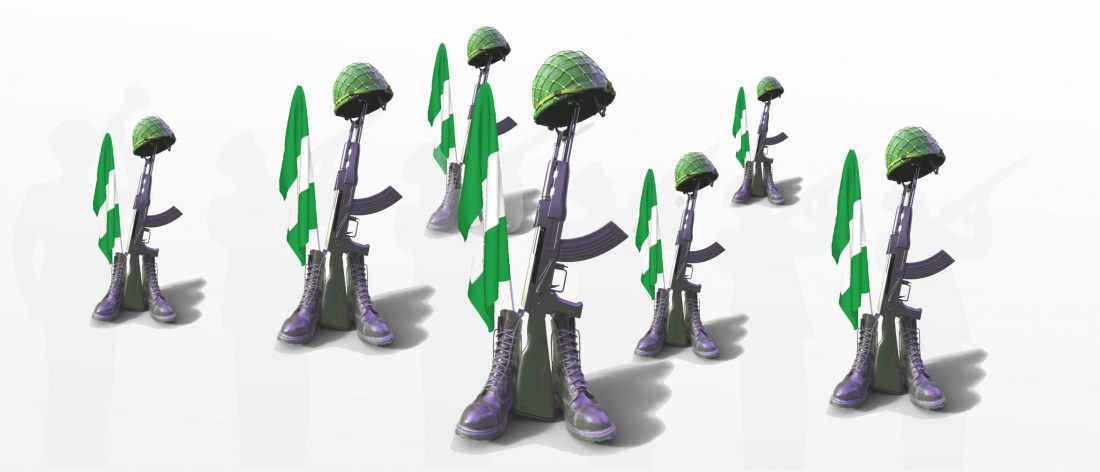
Meanwhile, in fighting with the jihadist insurgents, hundreds of Nigerian soldiers have fallen in battle. In recognition of their sacrifice, Nigerian defense authorities and some charity organisations have been making efforts to honour the slain soldiers in the fight against insurgency and address their families’ welfare needs. Despite the efforts, the slain soldiers’ families have expressed disappointment with their plights and have continued to cry for more help. This edition of Nextier Insights highlights the precarious situation of the families of slain heroes who died fighting against the Boko Haram insurgency in the North East. It proffers ways to address these plights and provide the incentive to motivate other military personnel on the battlefield to give their all.
Battle Casualties
The Boko Haram insurgency has continued to cause one of Nigerian military personnel’s most significant battle casualties since the end of the country’s civil war (1967-1970). According to Senator Ndume, between 2013 and October 2019, 840 soldiers were killed by Boko Haram terrorists. In 2018 alone, the jihadist insurgents killed 459 members of Nigeria’s state security forces. This number exceeded the 450 security personnel killed in 2014. The insurgents caused 750 security forces personnel casualties in 2019, nearly double any prior year.
The Plight of Families of Fallen Heroes
Following the exit of the fallen heroes who were breadwinners of their families, members of their families face precarious realities of life. Widows and children of the fallen soldiers live in sorrow, pain, and anguish. They cannot keep up with survival and have become distressed, hopeless, and living under perpetual psychological torture. Widows of the slain soldiers are left to fend for themselves and their children with little military authorities’ assistance. In the struggle for survival, they engage in menial jobs to meet up the responsibility thrust upon them following their breadwinners’ departure. As daily feeding becomes a problem, most widows and sometimes their female children engage in prostitution to make a living.
Military authorities have also quit from the barracks after staying for one permissible year to make way for others. The school authorities expel the soldiers’ children and wards for non-payment of school fees. The distressed loved ones of the slain soldiers have expressed feeling disappointed and abandoned by the Military Board. Some families of fallen servicemen reportedly held that the military was unprofessional in handling the tragic deaths of these soldiers and officers. In July 2019, a media report claimed that 1,000 fallen Nigerian soldiers in the fight against Boko Haram insurgency were secretly buried in an avalanche in an unmarked gravesite by the military at the Maiduguri Barracks for over one year.
Tributes to Fallen Heroes
As a mark of recognition and honour for the fallen heroes for their gallantry in the fight against the Boko Haram insurgency, the Nigerian military authorities, in marking the 2020 Armed Forces Remembrance Day, paid tributes to the soldiers killed in the battle against the Jihadist insurgents. The Nigerian military held a special remembrance event in Abuja with smaller ceremonies in states like Borno, Yobe, and Adamawa, the insurgency’s epicentres. The Nigerian military authorities organised a concert to honour the fallen heroes tagged Tribute to Our Heroes. During the event in Abuja, 200 widows of the fallen soldiers and their relatives received food and financial support from the Ministry of Defence. However, these efforts have not been enough as the slain soldiers’ families’ plight remains precarious. Some families of the slain soldiers have complained that the death benefits already paid were barely enough to cater to their needs. In contrast, some others have alleged undue delay in the processing and payment of the benefits or entitlements.
Fallen Heroes Deserve Honours
Based on the precarious situation of the lives of the families of the slain heroes, a range of potential intervention programmes are imperative to address their plight. The efforts to address their plight should encapsulate the following strategic solution options.
1. Establishment of Nigerian Army Battle Casualties Welfare Fund: The Nigerian military authorities should set up a special welfare fund to avail monetary assistance to the next of kin of army battle casualties of the jihadist violence. This fund will help to provide comfort and hope to the surviving families of the fallen heroes. The Army Battle Casualties Welfare Fund has been in use in the USA to give comfort and hope for slain soldiers’ surviving families.
2. Education Sponsorship: The Nigerian government, in collaboration with corporate organisations, should avail special education sponsorship to the children of the departed soldiers. This solution should encapsulate the payment of school fees for at least four of each slain soldier’s children from primary school until tertiary education completion. In the UK, Folds of Honour has supported and served the families of fallen heroes and servicemen in many ways. The Nigerian Army, during the Armed Forces Remembrance Day in 2020, announced plans to provide education sponsorship for children of the fallen heroes in the fight against the Jihadist insurgents. The Nigeria government should quickly implement this proposal.
3. Widow Empowerment Programme: Corporate organisations should empower the fallen soldiers’ widows through small and medium scale empowerment programmes. These programmes would help them generate sustainable income to assuage the hard realities their husbands’ deaths have thrust upon them.
4. Establishment of Insurance Policy: Nigerian Military authorities should establish an insurance policy for soldiers. This policy will help ensure that fallen heroes’ families are adequately taken care of by the state. In the UK and the USA, military life insurance is in place to make life financially easier for the loved ones of fallen patriots (Cozza, LaMorie, and Fisher, 2018).
5. Elimination of Undue Hassles in Accessing Entitlements: Nigerian military authorities should ensure that fallen soldiers’ families do not face challenges in accessing their beloved ones’ entitlements. Corrupt practices, incompetence, and bureaucratic bottlenecks, which often permeate Nigerian state institutions, have, over the years, affected accessing these entitlements. The Colombian experience provides valuable lessons for Nigeria. The government should fix the army and sustain its war on corruption (Jerome, 2015)
Summarised Recommendations
- The Nigerian military authorities should set up a special welfare fund to avail monetary assistance to the next of kin of army battle casualties of the jihadist violence.
- Children of the departed soldiers should be given opportunities by the Nigerian government and corporate organisations to acquire primary education for free.
- Corporate organisations should empower widows of the fallen soldiers through small and medium scale empowerment programmes.
- Nigerian military authorities should establish an insurance policy for soldiers.
- Nigerian military authorities should ensure that fallen soldiers’ families do not face challenges in accessing their beloved ones’ entitlements.
Recapitulation
The decade-long Boko Haram insurgency has caused significant battle casualties on the Nigerian military fighting in the North East. The deaths of these soldiers who are breadwinners of their families have made them face difficult situations, demanding the adoption of a combination of vital measures by the Nigerian government and corporate organisations beyond paying tributes. Elements of these solutions must include establishing Nigerian Army Battle Casualties Welfare Funds, setting up education sponsorship for children, widow empowerment programmes, adopting military insurance policy, and eliminating undue hassles in the accessing entitlements of fallen heroes by their next of kin.